About
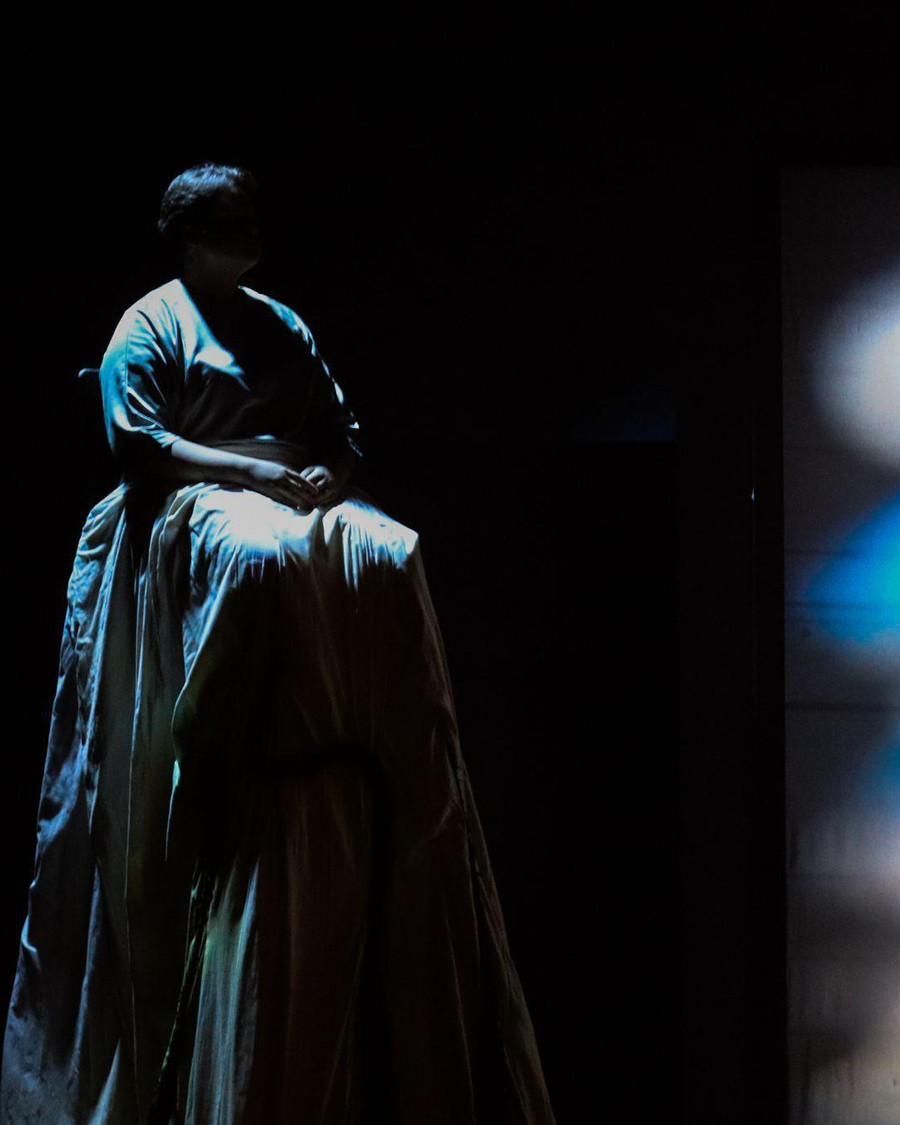
A scenographer and costume designer working in theatre and performance — designing the space, the body and the light a story needs to be told.
I am Nomsa Tina Mavuka, an aspiring scenographer from Johannesburg, Soweto. I have obtained a degree in Theatre and Production with a specialisation in Writing and Designing for the stage from the University of the Witswatersrand. Throughout my training, I gained an understanding of script analysis and theatrical conventions, which allowed for a deeper exploration of devised work as a starting point for creating fully actualised work. Devising has influenced my approach to projects, especially my use of found objects as a starting point (e.g., props, costumes, or furniture). After obtaining my degree, I worked at Rhodes University in the Eastern Cape as the Interim Head of Wardrobe from 2024-5. I facilitated the design and production of costumes for students and departmental productions, including RU Game ? In this production, I worked collaboratively with the design supervisor to design the costumes, transforming existing blue worker overalls into a uniform that later revealed personality. With similar projects to RUGame? Resourcefulness was essential: using found objects, adapting them to the relevant text or play, or adding new elements was often the only solution. My interest in pattern making and drafting served as a blueprint for the work I made, and at times even became a layering element within the costumes.
Professional Practise
In many of the projects I have worked on, my process was shaped by found objects born of necessity, meaning sourcing materials from what was available in the wardrobe or workshop was the only option. However, this has evolved further from just necessity but into a seed for exploration and play. An example of this is the production of Letter 8 to Mousai, a choreographed piece for which I designed the set and costumes. The piece was based on Franz Kafka’s “Dearest Father.”, where the choreographer used blazers and chairs in rehearsals; These items served as a starting point, initially signifying Kafka’s father and his role in the family home as an authority figure. The blazers were a starting point but through my interpretation and research, it allowed for ‘grafting’. The grafting meant joining the ideas of the profession of Kafka’s father as a tailor and an authoritarian figure, infusing the meaning of rules of rigidity with the practice of garment making. Furthermore, through making costumes, I have explored how materials can be manipulated through deconstruction, layering and treatment to create something new and relevant to the story. An example of this would be the production of Ityala Lama Wele, where prison blankets were used for shorts and shawls, and other materials such as hessian were used to create layers for the antagonist’s skirt.
Feel free to browse through my portfolio. I am interested in hearing about your project.